Tuesday, 30 April 2013

Keeping The Critters Out

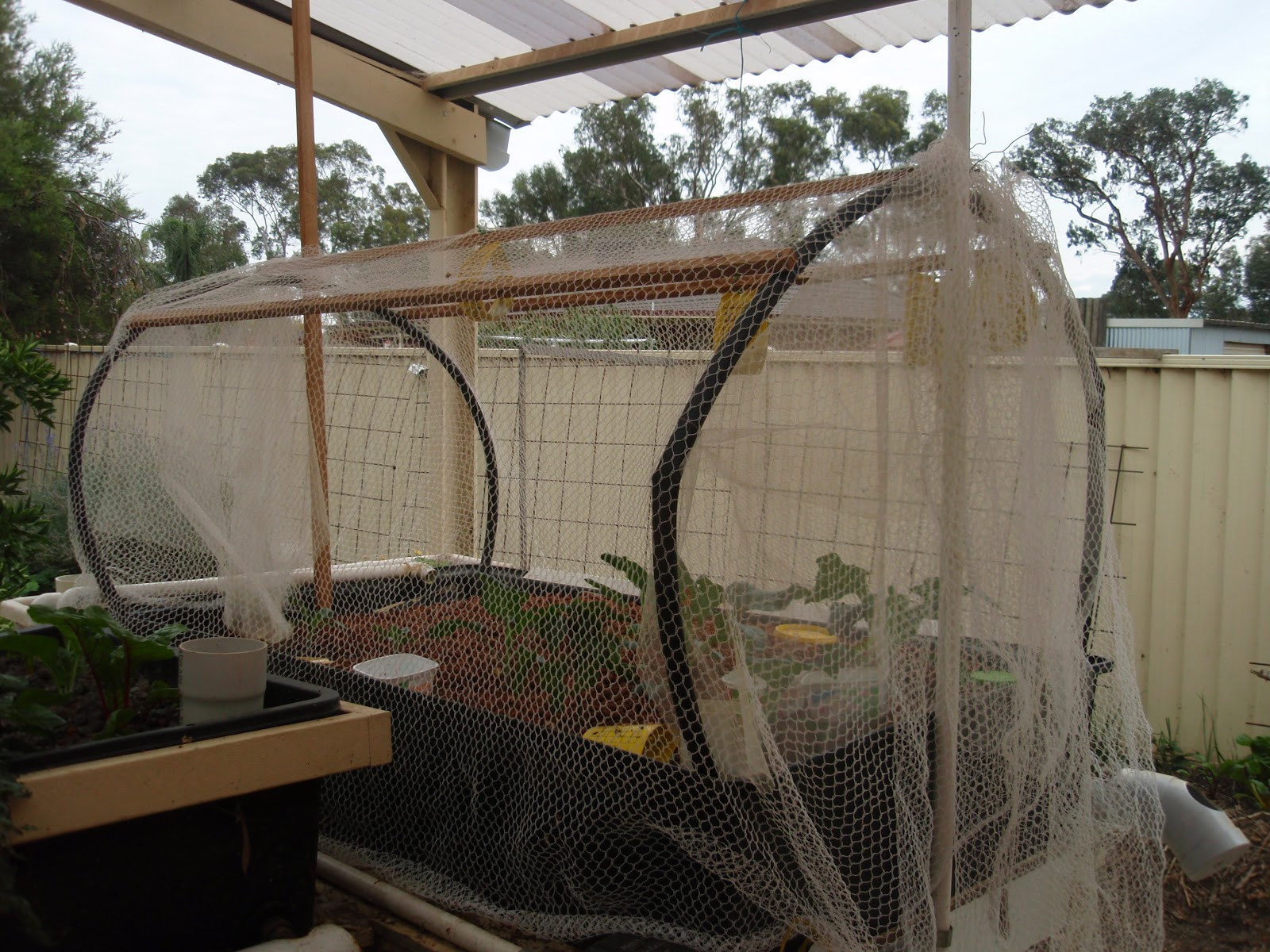
A stroll around my garden at the moment reveals a number of beds and individual plants with netting draped over them. It looks as if the plants are in prison, but it's all for their own good. The covers are keeping the critters from eating them or digging them up.


Cabbage white butterflies are a perennial problem. I usually wait until they have disappeared from the garden and try to get a crop of brassicas planted and harvested before they re-appear in spring. Sometimes this results in beds still being occupied by brassica crops when I'm ready to plant spring/summer crops, thus resulting in those crops being planted later than I would wish. I do place upside down bottles over individual seedlings, but then the seedlings can outgrow the bottles when there are still cabbage whites around. This year I decided to cover the beds with netting to keep the pests off my seedlings.


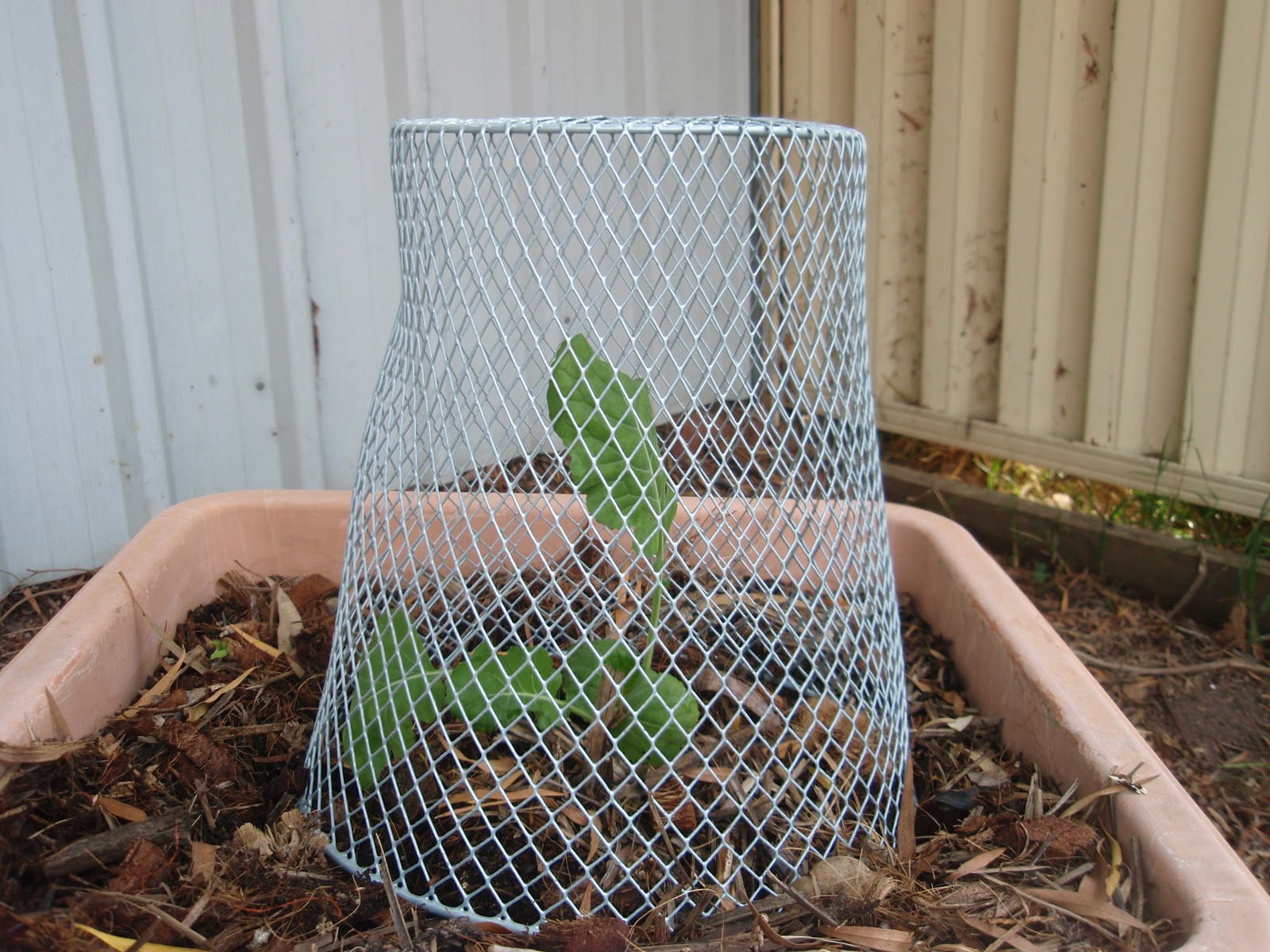
One lonely broccoli plant all by itself in a pot was outgrowing its protective bottle so I bought some cheap, wire, waste paper baskets from a discount store. Turned upside down, these make good plant protectors. By the time the broccoli has outgrown its basket, there should be no cabbage whites around for a while. At nearly $3 per basket, this might seem like an expensive way to get a bit of broccoli or a cabbage. Wouldn't it be cheaper just to buy it? In the short-term it would be, but I'm sure the baskets will last many years. Their use will also allow me to grow better-tasting and more nutritious food without chemicals, and to plant the varieties of my own choosing. So, I maintain that it's worth the small expense and taking a bit of trouble over.


In another tank bed I had transplanted some strawberry runners so that next season the crop will be easier to harvest and also easier to keep the blackbirds off. Until last year these birds were not really a problem, they would visit, scratch around for a while, and then move on. Now they seem to be permanent residents, scratching the mulch everywhere. They soon found the new strawberry bed with its lovely loose mulch. Even though there is no fruit, they have been having a good fossick, scratching out some plants and covering others in mulch. That bed too is now covered.


The vegie garden might look like some kind of plant prison, but it's me who will be eating that great food and not the free-loading critters.

Tuesday, 2 April 2013

The War-Time Garden


I thought I knew something about the 'Dig For Victory' campaign in England during the Second World War, and about the garden allotment system. Well, I did know it on an intellectual level. What it really meant on an immediate and personal level to the population is something I have just gained some small understanding of through reading a book called Your Garden In Wartime by C.H. Middleton.

Middleton had a gardening program on the radio in the 1940s and during the war many of his programs were about growing food as part of the war effort. Some of the talks were subsequently published as this book, re-released a couple of years ago. It is a charming, nostalgic, very, very British compilation of jobs to do throughout the year. It is bitter-sweet in many regards, really bringing home the deprivations suffered by all to a basic level of trying to ensure an adequate food supply. Some of the advice is now known to be very wrong (calcium cyanide as a fertiliser, for example) and most of it is relevant only to the northern hemisphere.

It is not a book to read for its advice, though there is enough still relevant, and relevant to us in the southern hemisphere, with a bit of juggling of times and measurements, to justify spending time reading it. To me, it is more of a historical record of the gardening ethos during those bleak years.

Basic produce such as potatoes and onions were in short supply as a lot of Britain's supply had come from Europe, even the seeds for many vegies were formerly produced in Europe. There is a great deal of detail about growing potatoes and onions and methods of sharing seeds. Middleton often cautions people against buying more seed than they can use as this will mean others do without.

He gives credit to seed suppliers and nurserymen. The first for continuing to be able to keep up supply of most seeds and for being able to still produce catalogues, despite the shortage of paper. The latter for their patriotism in uncomplainingly digging up their life's work, of rose growing for example, to turn their land  over to growing potatoes.

On the subject of potatoes, the author at one point says that Hitler and his U-boats can do their worst, we will be all right if we grow enough potatoes to keep ourselves fed. Winning the war with potatoes!

While encouraging people to turn most of their flower gardens into vegie gardens, he repeatedly says not to forego flowers altogether because of the cheerfulness they bring to our lives, which we all need in these dark times. He says that next summer, Hitler or no Hitler, he is going to be naughty and grow some sweet peas, because he missed them last year and is sure he is a better man for having a vase of sweet peas to enjoy. I know, it's totally corny, but still brought tears to my eyes to think of the death, destruction and deprivation suffered by so many when we take so much that is good in our own lives for granted.

The book is full of things that are 'jolly lucky' or 'grand', such old-fashioned words and sentiments you have to smile.


I think I have found out, at last, why there is so much advice around to thin tomato plants by picking out the young side shoots as they appear. In 40 years of gardening, I have never done this. Call me lazy if you will, but I've never seen the point when tomatoes produce so prolifically without removing side shoots. Also, the extra foliage can act as sun protection and prevent fruit from becoming burnt in our hot summers. I think I have read about someone (was it Clive Blazey from Diggers Seeds?) who did proper tests to determine the usefulness of this practice and found it to be unnecesary.

Anyway, in Britain, the climate is so unfriendly towards tomatoes that they have to do a lot of growing and fruit producing in a very short time. The removal of the side shoots allows the plants to put more energy into fruit production. I was astounded to read that tomatoes grown outdoors might produce only four nice trusses of fruit! I'm not sure I would put in all the effort he describes to end up with only four trusses of fruit per plant.  

This was meant to be a brief mention of what I found to be a very worthwhile read. I'm sure it will interest other gardening obsessives. My copy came from the library, but I think I'm going to have to buy one. It will be one of those books to return to again and again for its charm and nostalgia.     

Sunday, 31 March 2013

Accidentally Great Chutney


Yes, this is a gardening blog, but lots of my food comes from the garden and this recipe was particularly good so I'm going to share it. Nearly every year I make green tomato chutney from the last of the tomato crop. First comes my usual recipe, adapted many years ago from a Cordon Bleu recipe for a larger quantity.

2.7 kg green tomatoes, chopped
3 lge red capsicums, chopped
1 kg brown onions, peeled and chopped
1.4 kg Granny Smith apples, peeled and chopped
300 g sultanas
1.2 lt white wine vinegar
1 kg brown sugar
1 tsp dill seed
2 x 15 g pkts pickling spices
1/2 tsp ground paprika
1 lge root of ginger, removed at end
1 dsp salt

Combine all ingredients, bring to boil and cook until thick, 2 - 3 hours. Do not let it reach boiling point until all sugar has dissolved. Remove ginger root, decant hot mixture into hot sterilised jars and seal straight away.

Now here is what happened this year.

First, I went shopping without my list. However, I've made this recipe many times and thought I could remember everything. Many ingredients were already in the pantry anyway, and, of course, I had the tomatoes.

I used red onion instead of brown, just because I like them better. Anyone allergic to onions can substitute more capsicums and some zucchini and/or eggplant. As long as you keep the proportions of vegie:vinegar:sugar about right there should be no problem. As you can see, playing around with the ingredients, adapting to suit your own needs, can have unexpectedly good results.

I thought there was enough white wine vinegar in the pantry. There wasn't. Sure, there were two bottles, but both were less than half full, giving me 800 ml. There was a little apple cider vinegar, so in it went. Still not enough for 1.2 litres. In went some balsamic to make up the difference.

The brown sugar that was  in the pantry was only half a kg. In went some dark brown sugar to make up the quantity. It left a couple of tablespoons of dark brown sugar in the canister. That's no good for anything, might as well use it up. In it went.

I wasn't able to find the little packets of pickling spice in the supermarket, so decided to use a mixture of what was in the pantry. This turned out to be cardamom seeds, whole black peppercorns, cloves and ground allspice, about a tsp of each.

Instead of the ground paprika, I used two hot peppers from the garden, finely diced.

I'm pretty sure I completely forgot the salt.

Despite, or because of, all the changes, I think the finished chutney is the best ever.

Because I didn't have enough sterilised jars prepared, there was some mixture left over. This was stored in the fridge until I decided what to do with it. A couple of days later, I vitamised the mixture with enough apple juice to bring it to a thick pouring consistency (250 ml), boiled it up again for about 15 minutes then poured it into sterilised bottles. It is quite spicy and will make a great flavour addition to many winter meals as well as being used straight on meat dishes. 

Making chutney is a lot of work; this took four hours from set up to clean up, plus a little time later to make the sauce, but the result is worth it.


Sometimes I make summer relish with a variety of vegies from the garden, including zucchinis, eggplant and cucumber. One such recipe is in my book, Gardens For All Seasons. This relies on having the vegies ready to use at the same time, which does not always happen.


Friday, 22 March 2013

Ladybird, Ladybird, Fly Away From My Cucumbers


A couple of years ago a friend asked me to identify some mysterious yellow caterpillar-type creatures that were eating her cucumber leaves. Though I had never encountered them before, it did not take long to find out that they were the larvae of the 26-spotted ladybird.

It was apparently a very good year for this pest. After I had identified it for my friend, I discovered it in my own garden, then a number of other vegie growers in the area mentioned that it was in their gardens. I decided to break the pest ladybird's life cycle by squashing every one I saw and pulling up the cucumbers, their favourite snack (in my garden at least). I did wear my specs to make sure I was correctly identifying and only destroying the pest species and not any beneficial ladybirds.


Last year, I did not see any. This year, there were a few early in the season, which I quickly squashed. However, in the last week they have returned in large numbers. The giveaway sign is skeletonised leaves on cucumbers, canteloupes, pumpkins, zucchinis and potatoes. They might also feed on beans and tomatoes so be watchful for leaf skeletonising on all crops. Look on the backs of the leaves and you will see the grubs munching away, usually they are yellow, but sometimes can be a brownish ochre colour. There could also be clusters of yellowish eggs. The adult beetles feed on leaves too, but they are usually found on the tops of the leaves.

Pyrethrum sprayed directly onto the grubs will kill them. However, all I have done is squash any adults and larvae I've found and brush eggs off the leaves. At this stage of the season, in this area, the cucumbers and other curcubits have passed their best and are usually ready to come out of the ground; yesterday I pulled most of them out. The one zucchini that is still producing well was checked all over and had damaged leaves and pest inhabitants removed.

You can drop the pests into a jar with a little methylated spirits in the bottom if you are averse to squashing.

Most ladybirds are friends in the garden. Some eat small pests such as aphids, mealybugs and spider mites, others browse on powdery mildew that might be on plant leaves. Do not make the mistake of thinking that all ladybirds are benign or beneficial. If you are in any doubt, catch one and count the spots, then get rid of the pest species before they get rid of your crops. The 28-spotted ladybird is a different species from the 26-spotted, but is also a garden pest.

This website is a useful guide to ladybird identification: http://www.brisbaneinsects.com/brisbane_ladybirds/LadybirdFieldGuide.html

Monday, 11 March 2013

Green Gardening Meets Pragmatism


A few weeks ago I discovered, very painfully, numerous times, the presence of a paper wasp nest in the garden. My practice has always been to leave them alone. They are a valuable part of the garden's biodiversity: the adults feed on nectar and hunt caterpillars (many of which are larvae of garden pests) to feed their own larvae.

These wasps deliver an intensely painful sting when anyone gets too close to their nest and I had been stung several times without discovering the location of the nest. One night recently, I was watering at dusk when a clump of what I first thought to be a dried buddleia flowers caught my eye. Surprised that I had not noticed a flower cluster of that size before it dried out, I put my hand up to break it off the twig. I was centimetres away from it when it moved. A cluster of wasps. I don't think I had moved that fast for years, but I did avoid receiving multiple stings.


The location of the nest, dangling above a frequently used pathway made it a nuisance. However, I still might have left it alone and simply tried to avoid the area for a while if it was not for the fact that my young granddaughters were visiting for a few days. Visions of hysterical toddlers and possible allergic reactions to wasp stings persuaded me that, in this case, the wasps had to go.

I gave them some time to settle back around the nest I had disturbed them from and crept out with the can of insect spray. The wasps have gone. I do feel disappointed that I had to do it, but when the safety of children comes up against free pest control in the garden, pragmatism wins. I'm hoping next time paper wasps decide to make a home in my garden, it is in the bushy area furthest from the house.


Monday, 11 February 2013

Once Was A Herb Lawn


Thyme, pennyroyal and chamomile growing in the pea straw. Initial watering was done by soaker hose once or twice a week.

Ten years ago, when we were planning our present garden, I was determined to have a herb lawn. I envisaged a roughly circular area to one side of the house, surrounded on three 'sides' by shrubs and bordered by a path on the fourth 'side'. Still in the development stage of the garden, I spoke at a garden club meeting where I mentioned this project. A lady approached me afterwards and cautioned me that herb lawns don't work: 'I tried one and it didn't work'. When I asked why it didn't work, she was unable to explain, but ended our conversation with the ominous words: 'You'll find out'.


Newspaper and pea straw mulch kept the weeds down.

I pressed ahead and developed the herb lawn anyway. I first sheet-mulched the area with newspaper covered with pea straw to minimise weeds, then planted a lovely design that included chamomile, thyme, pennyroyal and pennywort. It grew magnificently for a while, but, the chamomile died off in the first winter after planting and did not regrow. Sections of the pennyroyal die and regrow ad hoc. The thyme only grew, and continues to grow, in one section, bordering the path. The pennywort dies off in winter, but regrows and spreads in spring.


The herb was spreading lawn spread nicely for a while.

So much for the intentional plantings. Unexpectedly, the native violets planted as ground cover under the shrubs spread into the herb lawn, and spread, and spread, and keep spreading until the weather becomes too hot and dry for them. But they return with the first rain. One section of shrubs included a couple of creeping boobiallas, which also keep on spreading. Birds and wind spread seeds from nearby flowers onto the herb lawn and they grew, flowered, seeded and spread some more. 

Noticing the way things were developing, I decided that the herb lawn would become a feral flower field; well, that was what was happening anyway, so I helped it along by scattering more seeds and encouraging my granddaughter to pop seed pods of love-in-a-mist. 


Now the herb lawn/feral flower field is an ever-changing kaliedoscope of pennyroyal, pennywort, thyme, native violets, creeping boobialla, love-in-a-mist, poppies, calendulas, nasturtiums and amaranthus. This year, I added sunflowers to the mix; maybe they will self-sow or maybe I will need to replant some of the seeds I've saved.


Three or four times a year, after many of the flowers have grown and seeded, or when the pennyroyal becomes a little straggly after flowering, the area is mowed. The clippings are left scattered over the patch, where they act as mulch and contain seeds for next season's surprises.

During one drought summer, when restrictions prevented us from using any water to keep the plants going, the area was cut, covered with sugar cane mulch and left alone. As soon as it rained, seedlings began to emerge from beneath the mulch.


At the end of the drought the herb lawn was still covered with mulch, but the surrounding shrubs survived well. 

I found out that herb lawns don't work, not if you want to replicate the green sward of traditional grass. But, if you want something much more interesting and dynamic, try a feral flower field with creeping herbs among the flowers.

Saturday, 2 February 2013

Sunday Morning Stroll


After what seems like months of angry south winds, as well as plenty of hot, hot days, this morning was mild with a gentle breeze, ideal for a walk into town. Encouraged by the (comparative) lack of wind, we took along our cameras and I'm sure we looked like tourists admiring the town.

It is interesting what you see when you take your time. We frequently walk around the town, but this morning strolled a slightly different route. The pictures give a glimpse.


There are many huge red gums around the town, not as many as there used to be since the council's overconcern for public safety has led to the removal of quite a few. The beautiful old red gum pictured here is a striking feature of the town. To the left are three lemon-scented gums planted to commemorate the town's 3 Victoria Cross recipients. I think that is a record number of VC's for one small town.


Astonishingly enough, in all the time we have lived here we had never previously stopped to read the plaque beside a venerable oak tree. It was planted in 1902 to commemorate the coronation of King Edward V11. I wonder how many others know of the tree's history.